Horror Vacui
21 march 2026 - 24 de january 2027Curator Marta Jecu
Centro de Arte Oliva
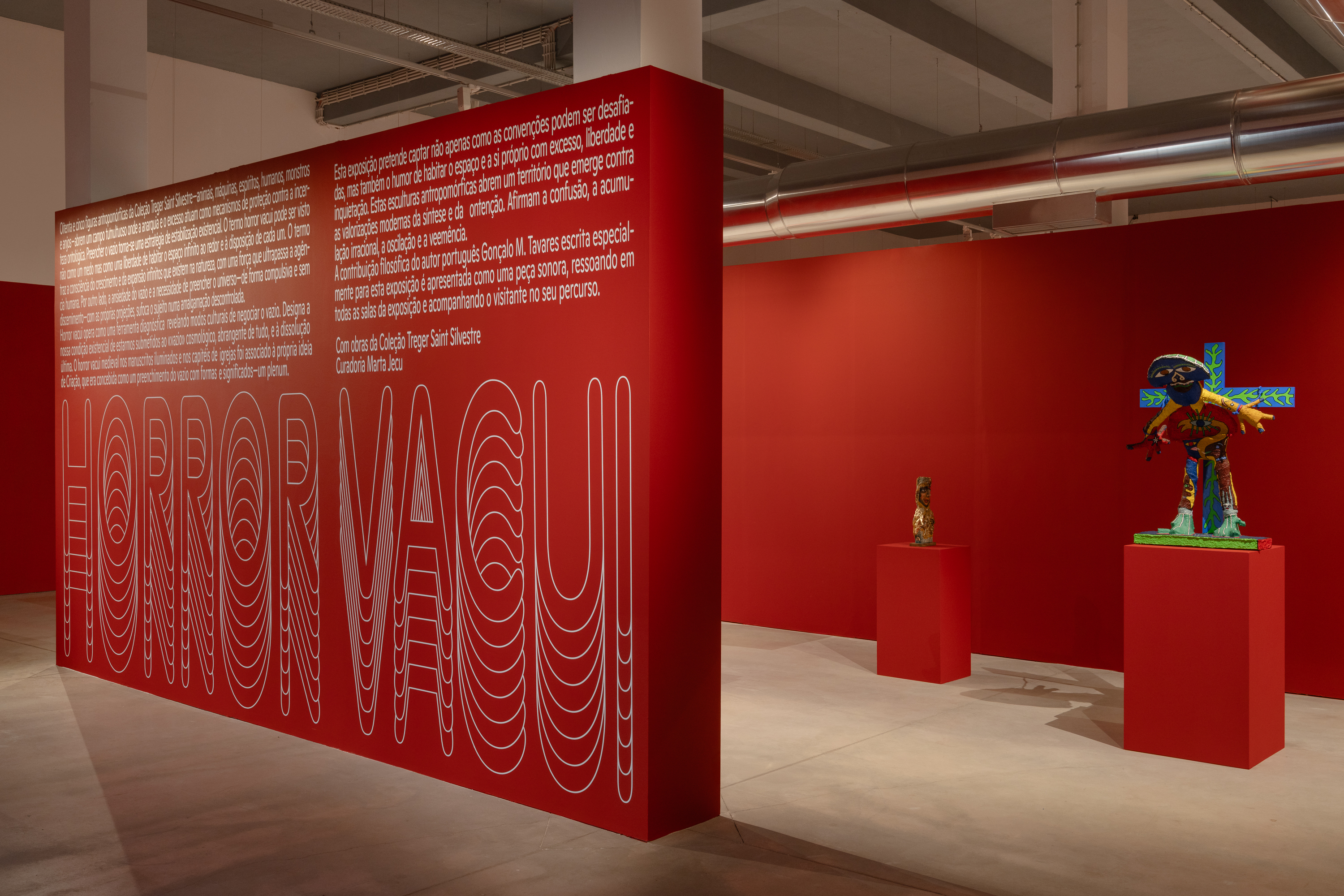
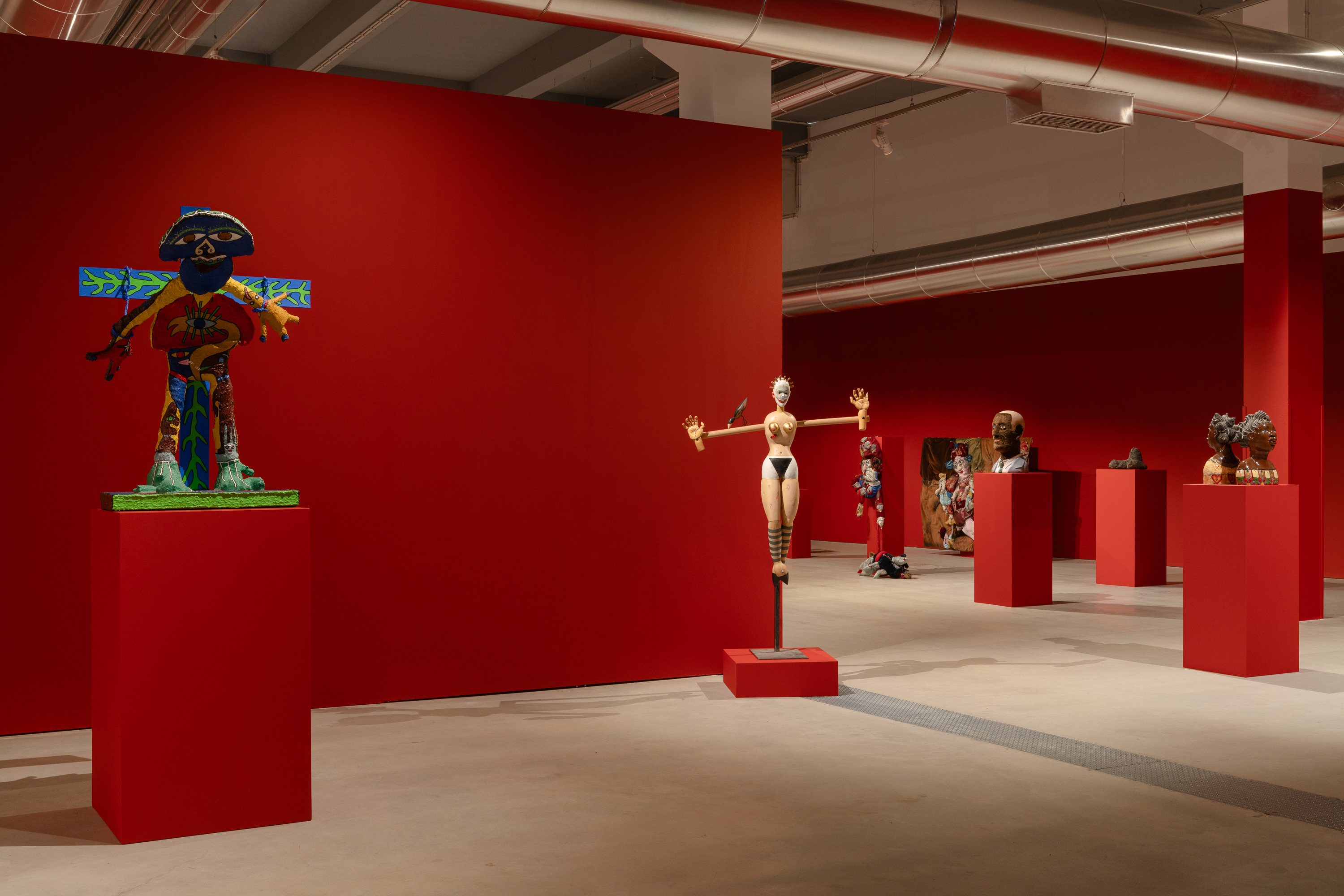
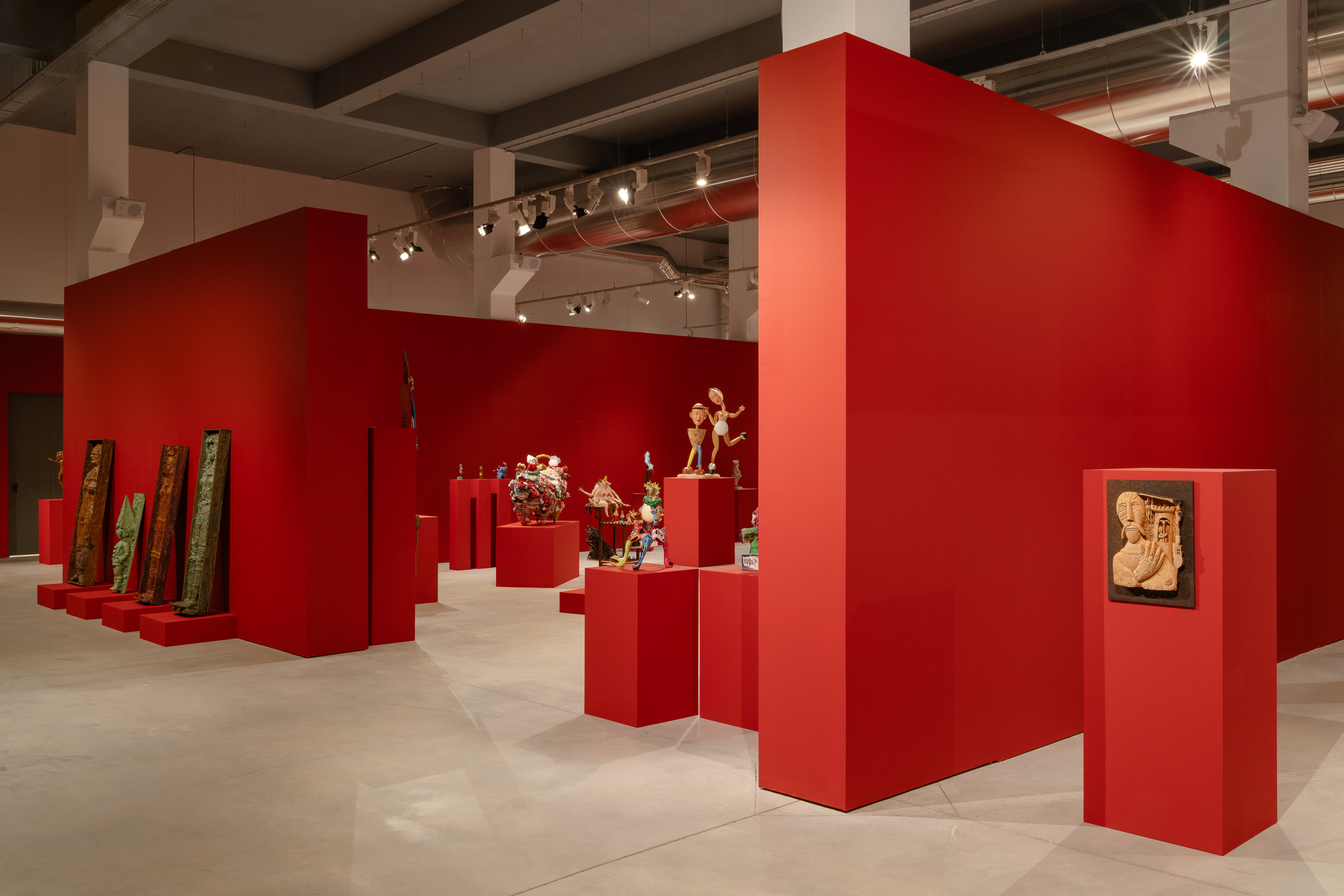
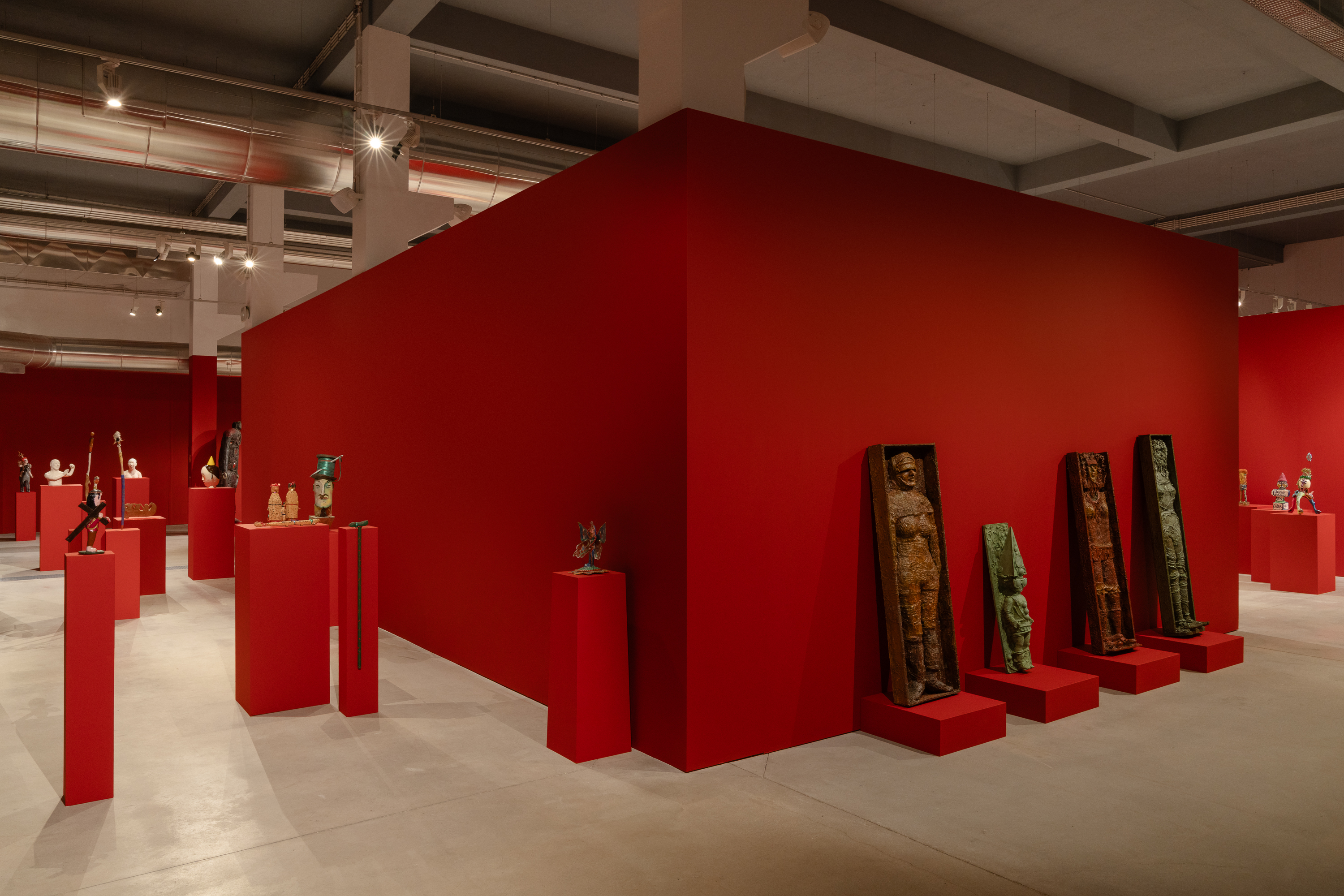
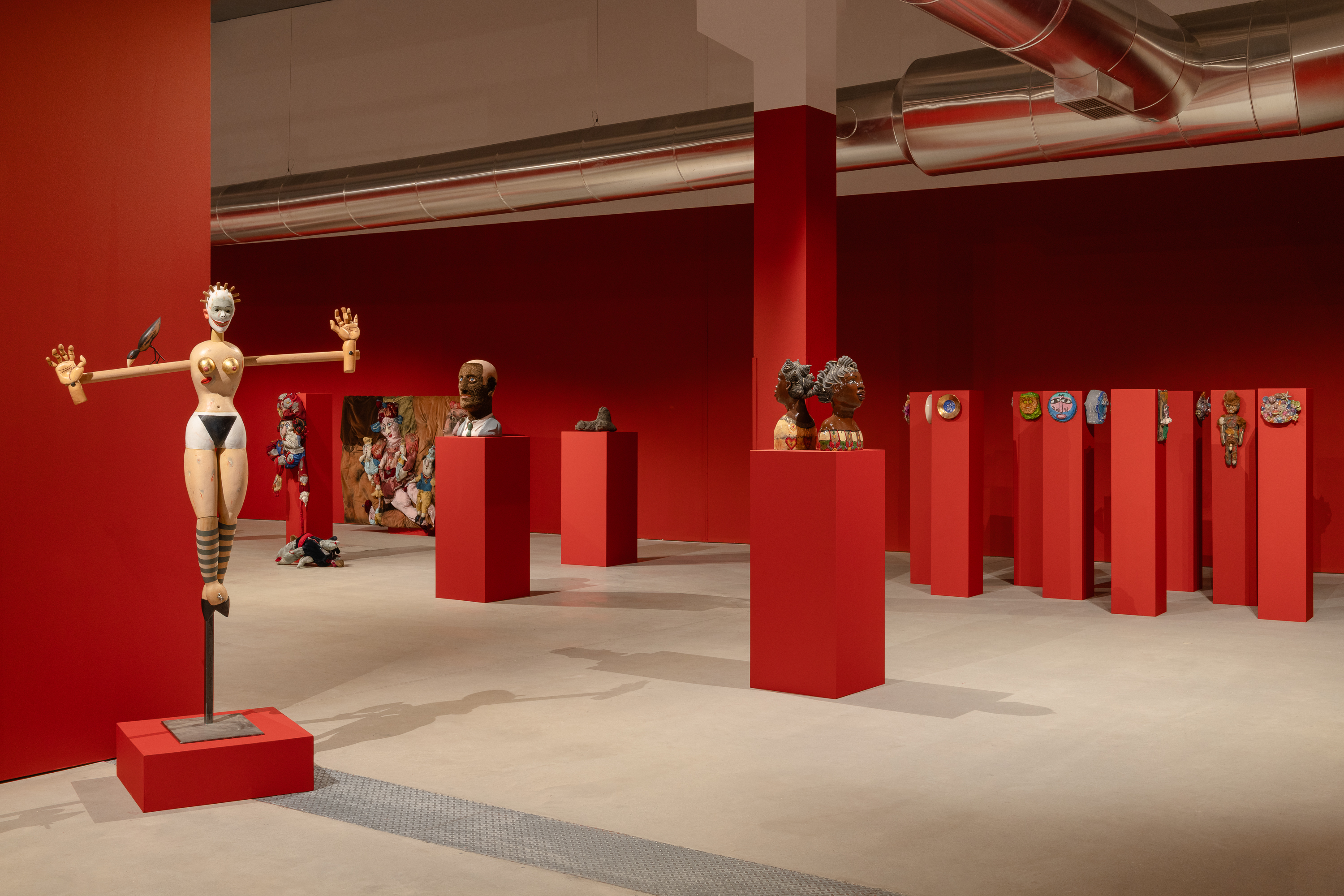
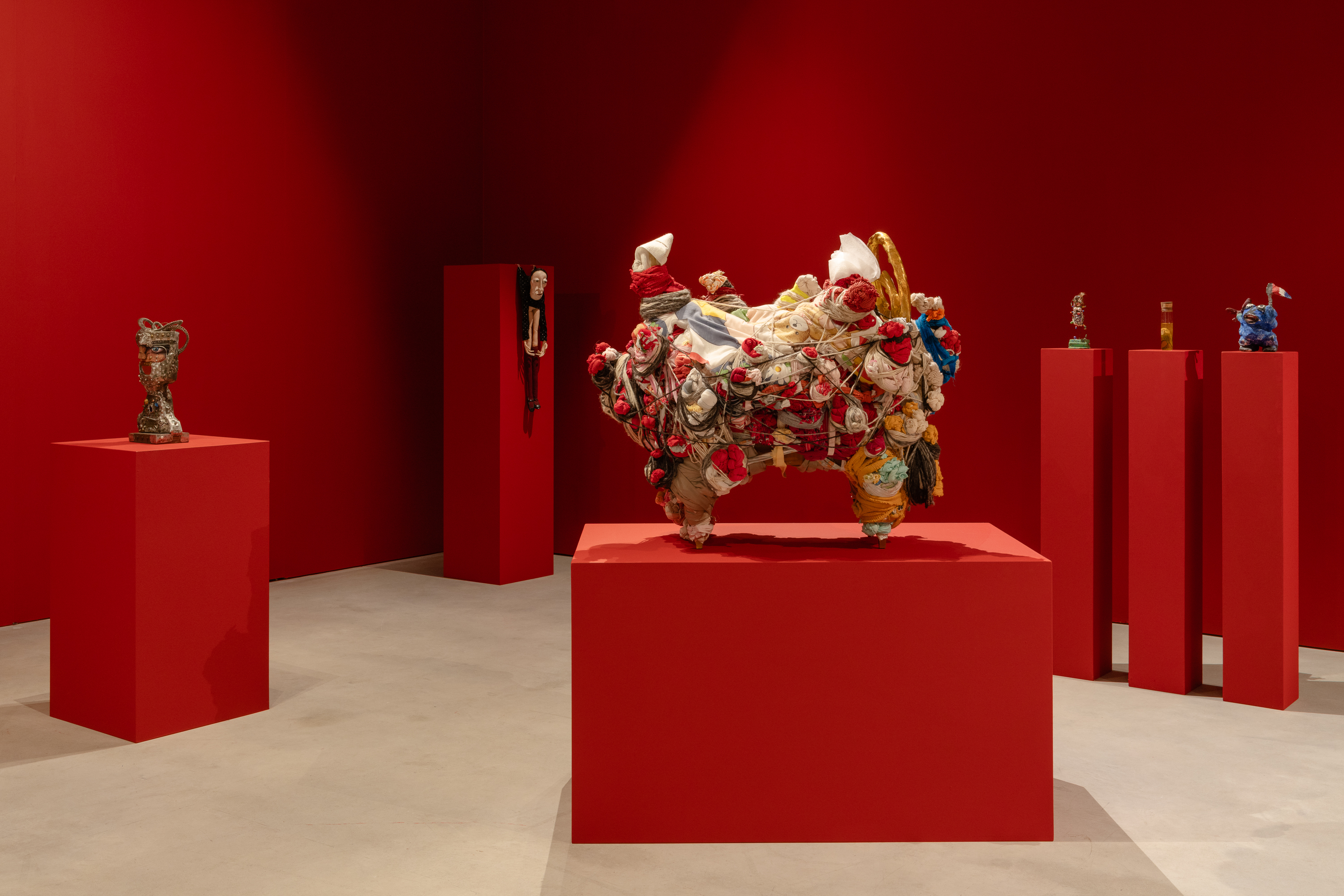
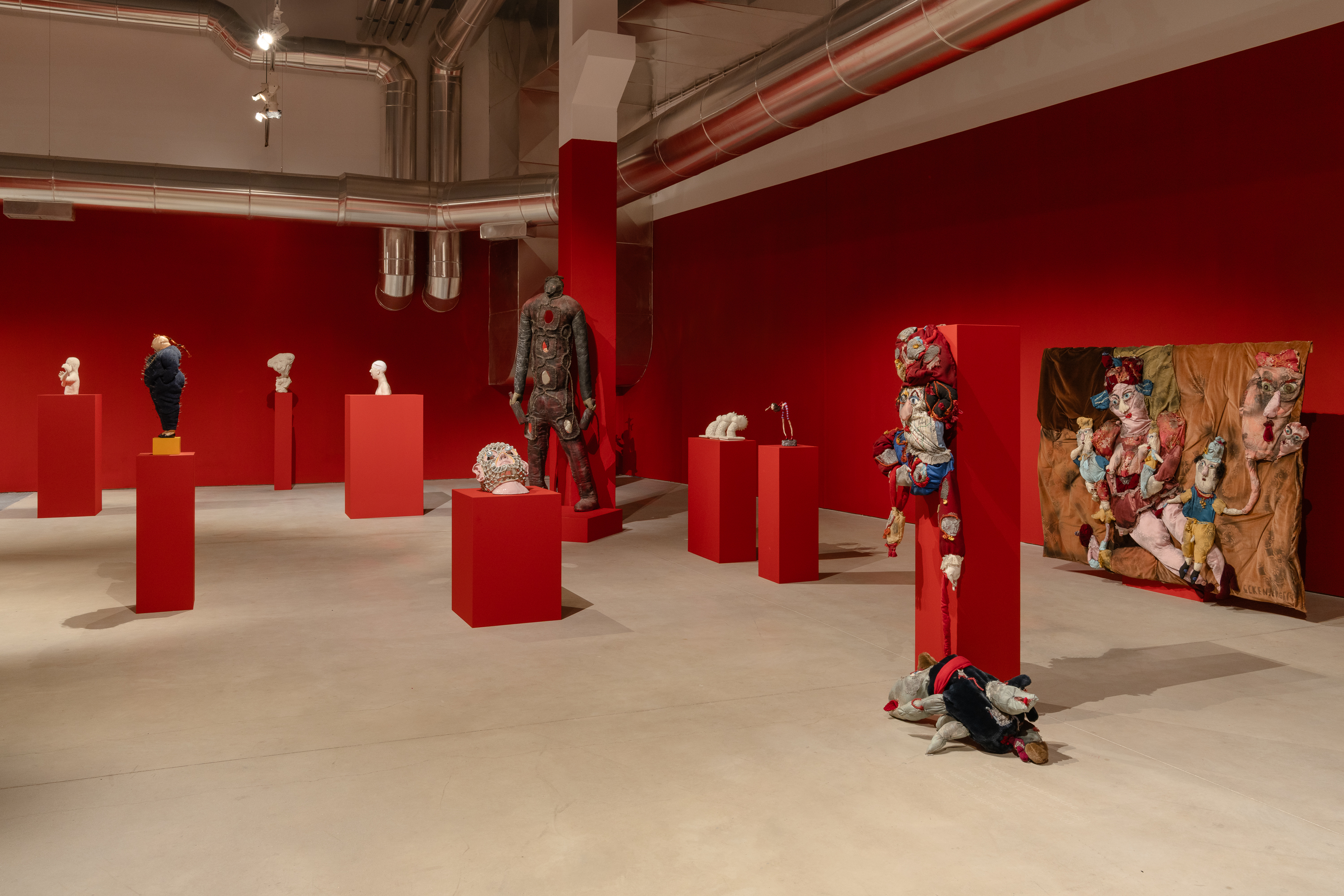
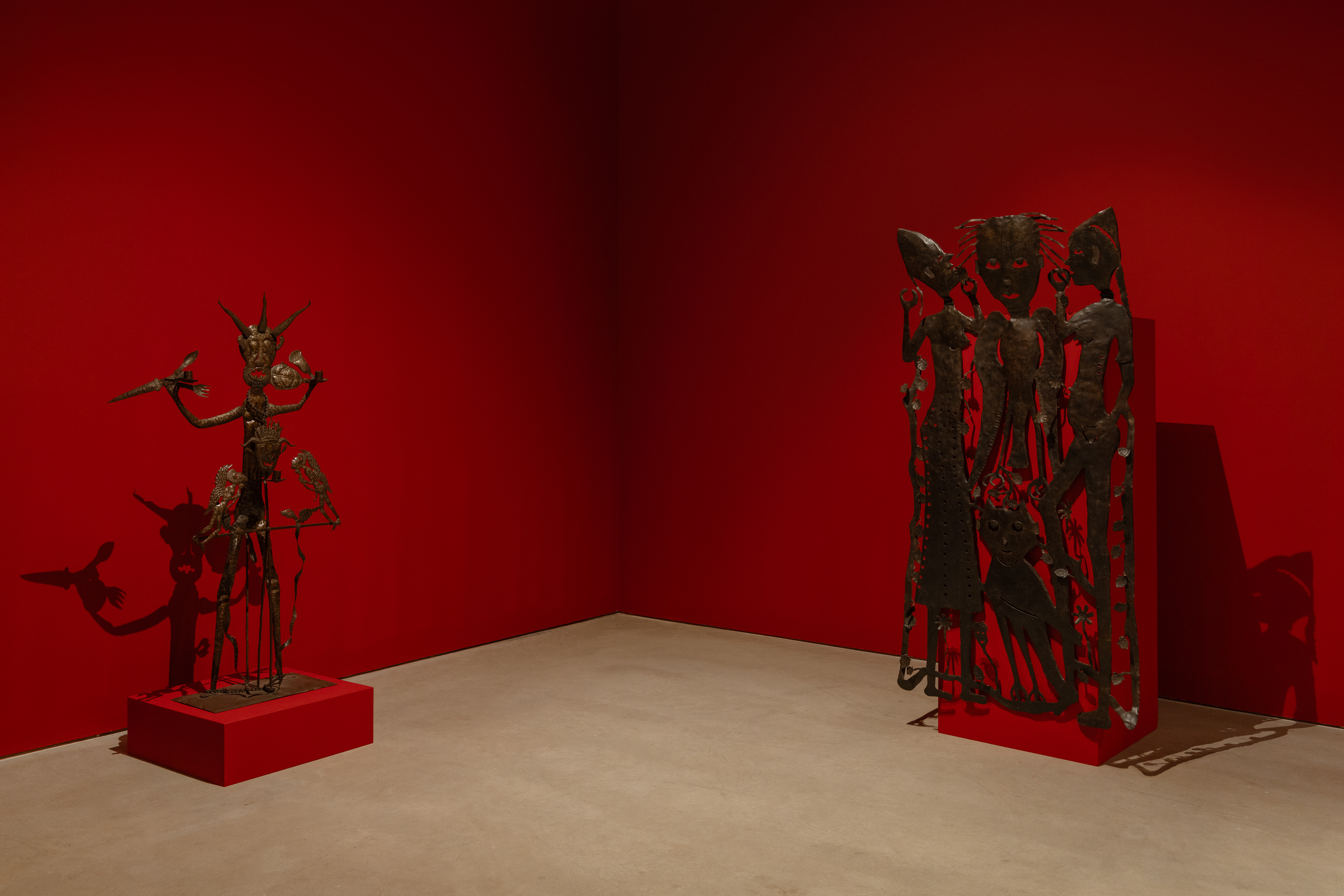
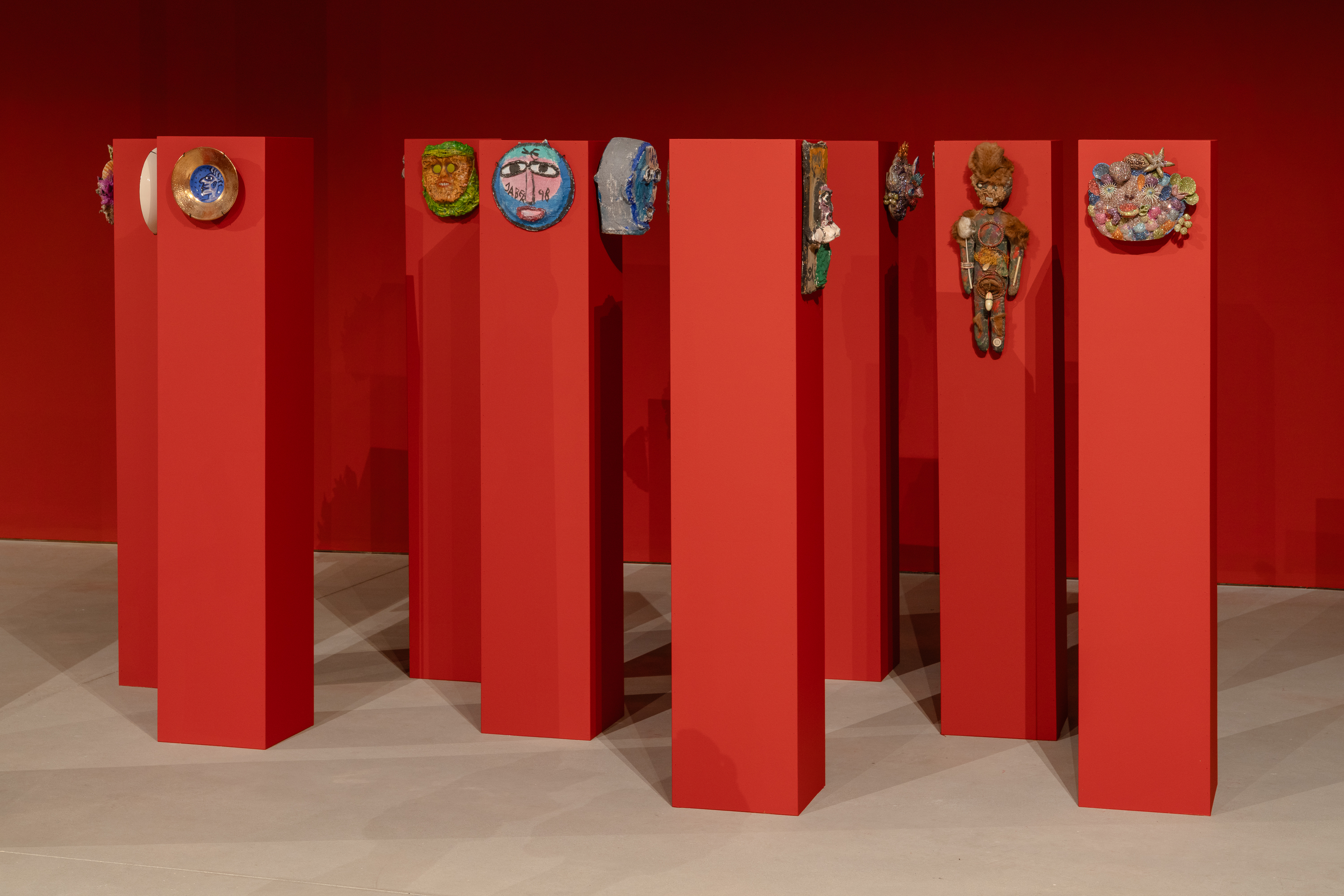
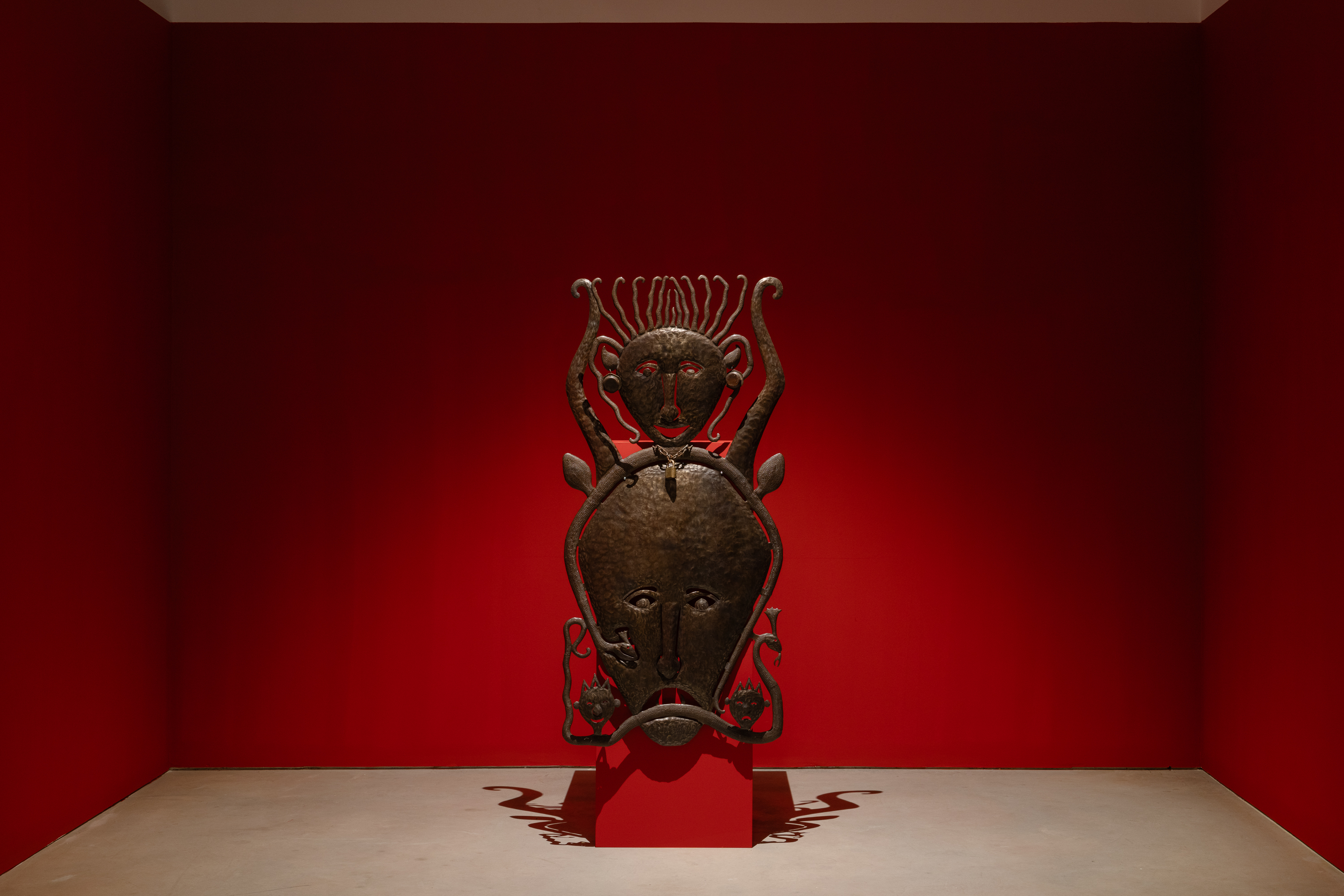
Eighty-five anthropomorphic figures from the Treger Saint Silvestre Collection—animals, machines, spirits, humans, monsters, and angels—open up a tumultuous field in which anarchy and excess act as protective mechanisms against ontological uncertainty. Filling the void becomes a strategy of existential stabilisation.
The term horror vacui came to mind because it synthetises this oscillation between being and environment, in a psychological and cosmological way, while also functioning as expression and manifestation. On the one hand, it can be seen not as a fear but as a freedom to inhabit the infinite space around us and at our disposal: filling it with overflowing imagination, manifesting a profusion of references and associations in a free development, uncensored by convention and intervention. The term evokes an awareness of the infinite growth and expansion present in nature, with a force that surpasses human agency. On the other hand, anxiety in the face of the void and the need to fill the universe—compulsively and without discernment—with one’s own projections can suffocate the subject in an uncontrolled, unstructured amalgamation
where elements become indistinct.
Introduced into the history of art, this term gave rise to a particular aesthetics that is less concerned with ornament than with a way of experiencing the world: a mixture of intense freedom and acute torment. This exhibition explores precisely this ambiguity. It seeks to bring the viewer close—very close—to the infinite “alter egos” of the artists (and of oneself), which speak through these sculptures.
Rather than a fixed concept, horror vacui operates as a diagnostic tool, revealing cultural ways of negotiating the void. It designates our existential condition of being subjected to all-encompassing cosmological “emptiness” and ultimate dissolution. The filled surface, by contrast, functions as protection: repetition, ornament, and saturation stabilise perception and guard against disintegration.
This exhibition seeks to capture not only how conventions can be defied, but also the humour of inhabiting space and oneself with excess, freedom, and restlessness. These anthropomorphic sculptures seem deeply anti-modern as they open up a territory that stands in opposition to modern valorisations of abstraction, silence, spatiality, synthesis,
and containment, affirming confusion, irrational accumulation, oscillation, and vehemence. They reinforce and dismantle the principles of contemporary art, transgressing convention and extending limits. A significant part of the exhibition consists of the philosophical contribution of the Portuguese author Gonçalo M. Tavares.
His text, written especially for this exhibition situates the heavy, handcrafted, dusty, time-worn sculptures on view within a precise meta-narrative. Presented as a sound piece, it resonates throughout the exhibition spaces and accompanies visitors along their journey.
Artists: Adérito Almeida, Agnès Baillon, Alain Lacoste, Alfredo García Revuelta, Anónimos, António Saint Silvestre, Blalla W. Hallmann, Franck Lundangi, Giovanni Battista Podestà, Guilhermina Júlia, Hans Verschoor, Jaber (Al-Mahjoub Jaber), Jean Camille Nasson, Jean-Jules Chasse-Pot, Jean Duranel, Joaquim Baptista Antunes, Joaquim Paiva, Joaquim Vicens, Gironella, José de Guimarães, Josette Rispal, Kazumi Kamae, La Mère François, Lionel Saint Eloi, Martine Orsoni, Mathias et Nathalie, Maureen Visagé, Michel Gouéry, Mirabelle Dors, Mozart Guerra, Murielle Belin, Nacius Joseph, Nili Pincas, Pascal Tassini, Paul Amar, Pierre Dessons, Poteau Dieudonné, Reinaldo Eckenberger, Reinata Sadimba, Roland Roure, Rosa Ramalho, Serge Jolimeau, Simone Le Carré-Galimard, Susanne Themlitz, Terry Turrell, Vitalis Čepkauskas, Wabé (Véronique Achard), Xurxo Oro Claro, Ymène Chetouane.